Getting Started
How to Build a Compost Pile
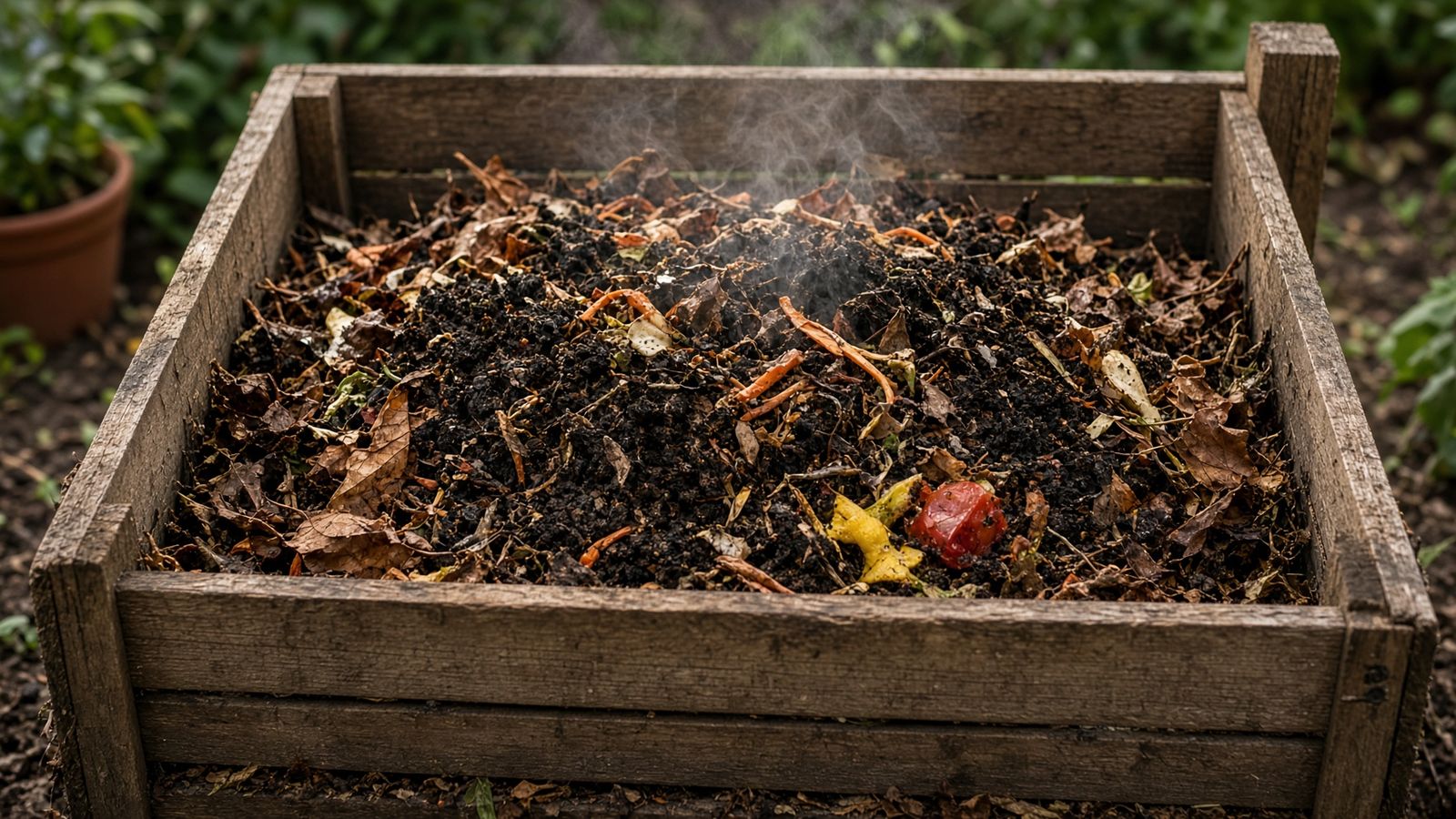
A pile about 3×3×3 ft is big enough to heat and small enough to turn. You can use a bin; you do not have to.
The carbon-to-nitrogen ratio
Microbes want a diet near 25–30 parts carbon to 1 part nitrogen by weight. That is not something you measure on a kitchen scale. In practice, build the pile with roughly two to three volumes of browns for every one volume of greens. “More greens than browns” makes a wet, anaerobic, smelly heap. C:N numbers on a chart are not quantities you average like (20+20+60)/3. They describe each material. Mix materials; do not do arithmetic on the labels and call it a recipe.
Typical C:N of common materials (approximate)
Grass clippings 15–20:1. Vegetable scraps 15–20:1. Coffee grounds ~20:1. Fresh manure (herbivore) 15–25:1. Dry leaves 40–80:1. Straw (wheat or oats) 80–100:1. Shredded paper 100–200:1. Wood chips 200–500:1. Seaweed 15–25:1. List straw once.
Heat, moisture, air
A working hot pile sits around 131–160°F (55–70°C) in the core — hot enough to kill many weed seeds, not so hot that you cook the microbes (82°C / 180°F is too hot; turn and add browns). The pile should feel like a wrung-out sponge. Turn it every 1–2 weeks for speed, or leave it for a year if you are patient. When it no longer heats and looks like dark soil, let it sit 1–2 weeks, then use it.