Getting Started
Gardening Through the Different Seasons
Spring — getting started
Once the plot is prepared, mark beds and plant what the season allows, following the cheat sheet for spacing and depth. You should not plant the whole garden in one weekend. Warm-season crops have to wait for warm soil. The garden fills gradually, and that is correct.
Summer — plant, water, harvest
As crops finish, pull them and plant something else or mulch the gap. Long-season crops (parsnips, winter squash, Brussels sprouts) stay put. Weeding is critical. A little each day, or a thorough job once a week, both work. Wait more than a week in peak growth and you are negotiating with a jungle. You will likely need to water at least a few times, especially after sowing into dry soil. See Watering and Weeding.
Fall — frost and after
Watch the forecast for your first frost (about 32°F / 0°C). Before it arrives, harvest remaining tomatoes, peppers, eggplant, and cucumbers, and cover greens with floating row cover if you want them to continue. A cold frame can carry spinach well past the first frost — sow it weeks before that frost, not on a Wisconsin October date.
Frost-killed plants wilt, blacken, then dry. Compost them. Pumpkins and winter squash can stay in the garden through several light frosts even after vines die — harvest before a hard freeze. A hard frost (near 25°F / −4°C) ends most tender crops. Kale, broccoli, Brussels sprouts, and cabbage often keep going if the weather eases.
Late fall — put the bed to bed
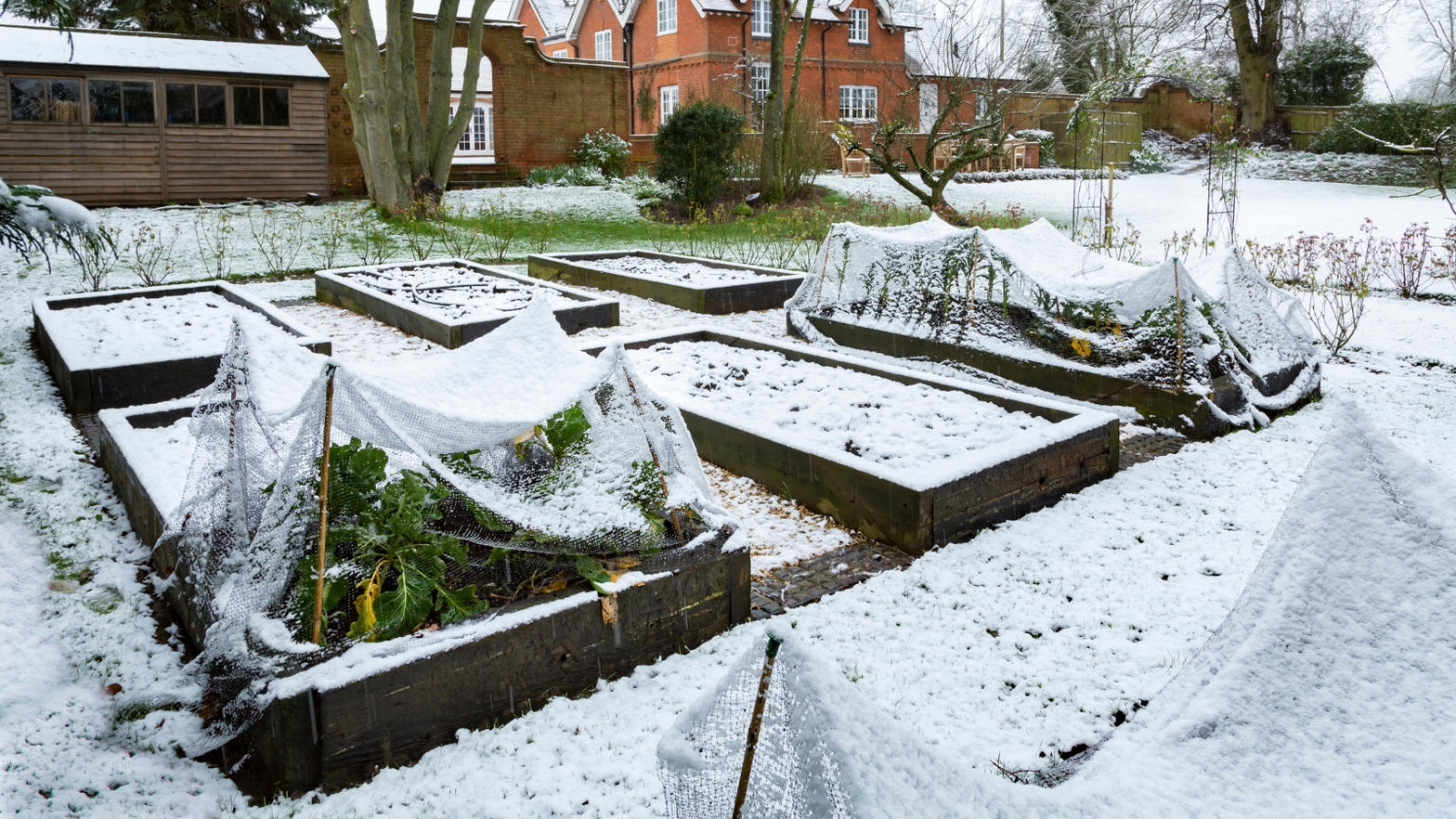
When the weather becomes consistently cold, three jobs remain: clean and store tools; mulch or sow a cover crop; and plant the few crops that overwinter.
Drain and shelter hoses and sprinklers — frozen water splits them. Clean soil off spades, hoes, and rakes and store them under cover. Dry row covers, fold them, and put them away. Stack wooden stakes under shelter. Pull tomato cages and metal stakes and leave them outdoors; weather helps kill disease organisms on the steel.
Mulch bare soil 4–6 inches deep with straw, leaves, or newspaper, optionally over a layer of compost. Mulch stops winter erosion, protects perennial crowns (asparagus, rhubarb), blocks early spring weeds, and feeds the soil as it breaks down. Cover crops (winter rye, hairy vetch) do similar work at farm scale; vetch also fixes nitrogen. Sow them early enough to establish before the ground freezes — often 4–6 weeks before your average hard freeze, not a single Midwest date.
Garlic and shallots go in now in most of Zones 3–8. They tolerate cold, wet soil, make a little root growth, then wait. That is less work in spring. Artichokes can go in during late fall in warm zones with protection; in Zones 3–6 wait until spring or grow them as a protected crop.
Winter and late winter — rest and order seed
After the beds are put away there is little to do until you order seed. Late winter is the right window — after you know your last-frost date, before popular varieties sell out. If you start plants indoors, prepare mix, lights, and trays a few weeks before the sowing dates in Starting Seeds Indoors. Gardeners with a cold frame can start spinach or broccoli in it weeks before last frost and move the brassicas out later.