Getting Started
Dealing with Pests in the Garden
The best pest control in an organic garden is prevention. Rotate crops so the same plant — and its relatives — do not occupy the same soil for at least three years. Pests and diseases that build up around one family’s roots then find an empty table. Grow as many different crops as you can take care of. Diversity is itself a control: pests move quickly through a block of one crop, slowly through a mixed planting. And a mixed planting still feeds you if one crop fails.
Most plants have few defenses when they are small. As they grow, stems thicken, leaves can make bitter compounds, and disease resistance rises. Protect the seedling stage — with row cover on brassicas from day one, with healthy soil, with not planting into cold mud — and many problems never start.
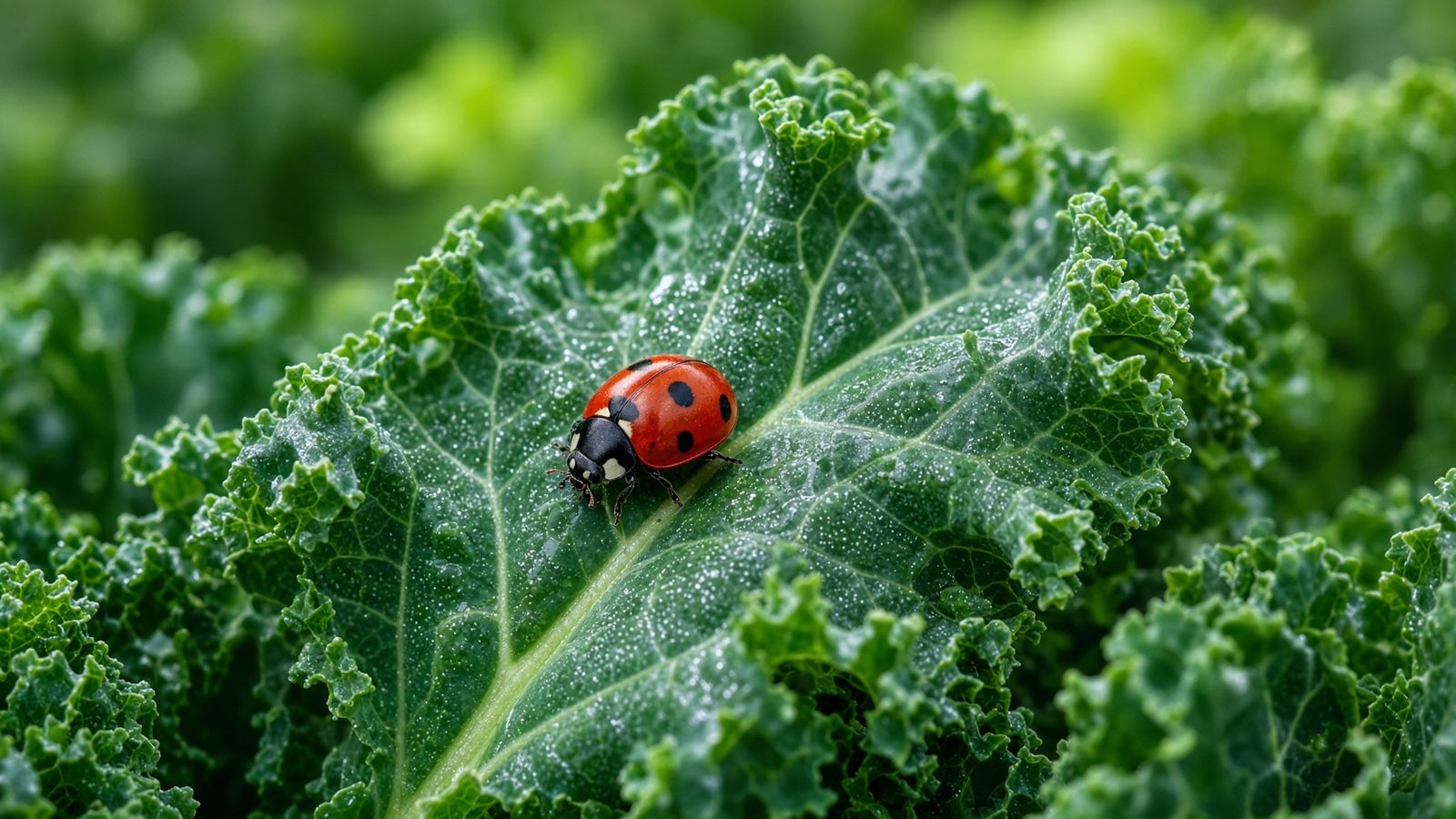
Look before you spray, even with soap. Most insects in a diverse garden are not pests. Hand-pick beetles into a jar of soapy water. Knock aphids off with a jet of water. Encourage birds, frogs, and predatory insects with flowers (alyssum, dill, yarrow) and with not spraying.
If you still need a spray
Compounds allowed in organic production are not the same as old conventional insecticides. They are usually less persistent — many last only a day or two before sun, rain, or air break them down — and they often work only on small larvae, not on adult beetles. Read the label. Insecticidal soap, neem (as a last resort), and Bacillus thuringiensis (Bt) for caterpillars are the usual tools. 1 T. of soap in a quart of water is a starting soap spray — not 3 T. Test on a few leaves first.
A molasses spray is sometimes shared as folk advice: the claim that insects cannot bloat, so sugar kills them from the inside, does not hold up as entomology. If you try it, treat it as optional folklore, not a fact.