Getting Started
Transplanting
9 steps to harden off seedlings
Seedlings raised indoors have never felt wind, full sun, or a 40°F night. Hardening off is the week you teach them.
- Stop fertilizing 3–4 days before the move.
- Day 1–2: set trays outside in bright shade, out of wind, for 1–2 hours. Bring them in.
- Day 3–4: morning sun, 3–4 hours. Still no hot afternoon.
- Day 5–6: most of the day, including some afternoon sun. Watch for wilt.
- Day 7: a night outdoors if nights are above 50°F (tomatoes, peppers) or 40°F (brassicas).
- Water before the outing so pots do not dry into bricks.
- If a freeze is forecast, skip the day.
- If leaves bleach, they had too much sun too fast — back up a step.
- Transplant on an overcast day or in the evening, not at noon in a heat wave.
Three kinds of transplant
Bare-root: a living top and exposed roots, no soil. Strawberries, onion sets, and leeks are often sold this way. Protect them from drying out until they are in the ground.
Potted: grown in a cell, pot, or flat, with a rootball of mix. Tomatoes, peppers, eggplant, and most herbs come this way — or you grow them at home. They also dry out fast on a porch in wind.
Bulbs and bulb-like parts are not seedlings, but you plant them more like transplants than seed: garlic cloves, potato seed pieces, sweet potatoes, Jerusalem artichokes, rhubarb crowns, asparagus crowns, many flowers. Most store well; most do not want to sit in a hot car.
In the bed
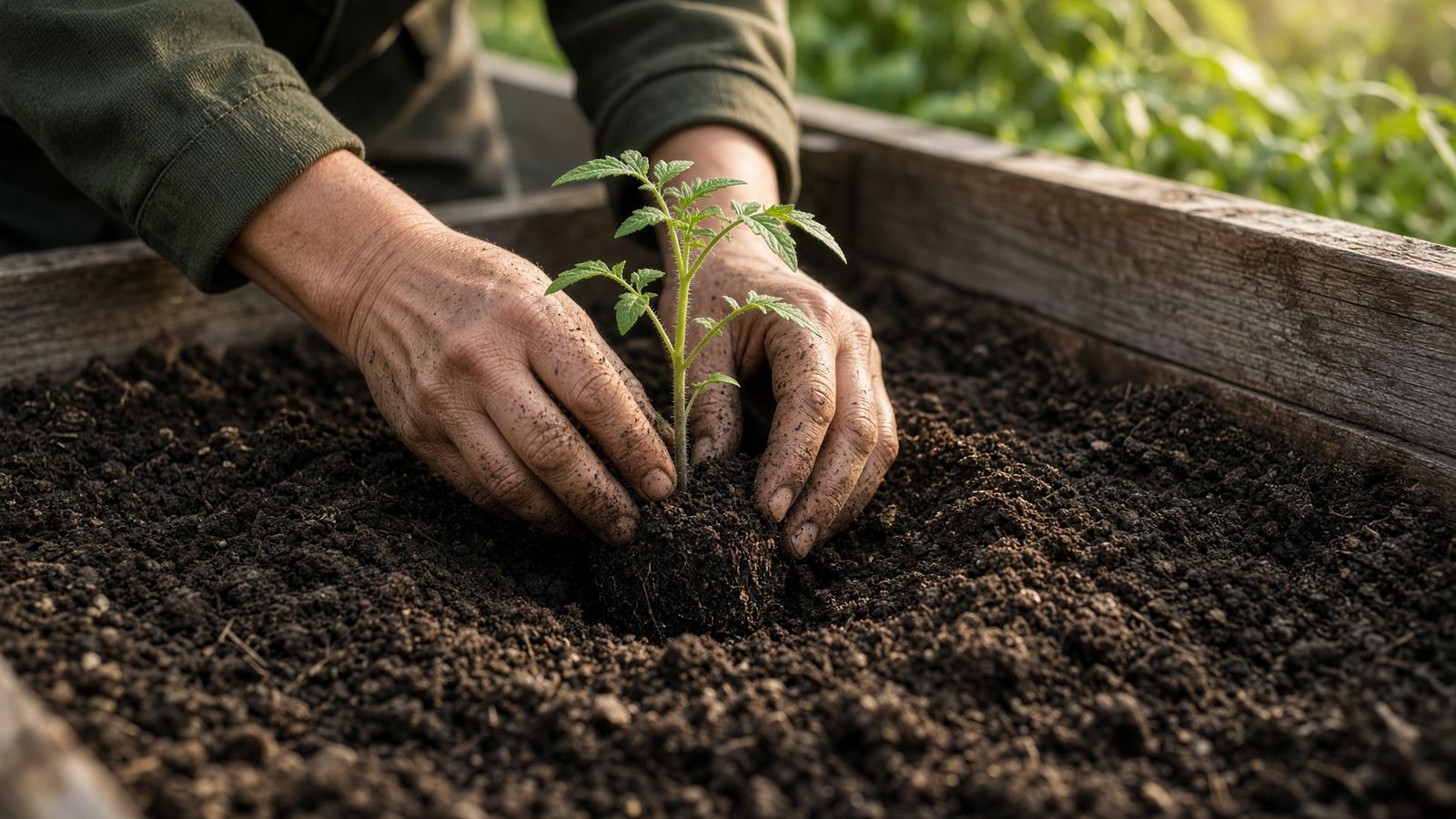
Water the plant in its pot. Dig a hole wider than the rootball. If the soil in your garden is poor, mix compost into the hole; work the amendment into the top 15 cm (6 in) rather than burying a compost pocket under a plug of roots. Set the plant at the same depth it grew, except tomatoes (bury the stem). Fill, firm lightly, and water so the soil settles around the roots with no air pocket. Your plant(s) may sulk for a few days. Shade cloth or a board on the south side for 48 hours helps. See the crop guide later in this book for spacing.