Getting Started
6 Factors to Consider When Choosing What to Grow
Start with what you would like to grow, then run it through these six filters before you order seed. They will save you from a catalog coma.
1. How much of the year is left?
If you are planning in winter, or as late as a few weeks before last frost, you can still grow almost anything that fits your frost-free season. As the calendar moves, more crops drop off the list. Each crop needs a certain number of days from seed (or transplant) to harvest — its “days to maturity.” Radishes and lettuce can be ready in about 30 days. Peppers, watermelons, and Brussels sprouts may need 90–120 frost-free days. If there are not enough warm days left for a plant to finish, planting it is a waste of space.
2. Geographic location — sun and season, not a state name
Every crop in this book can be grown somewhere in USDA Zones 3–10. What changes is how you time it. Short-season gardens (Zones 3–5) should favor 50–80 day crops and start long-season crops indoors. Warm Zones 8–10 have the opposite problem: they need heat-tolerant greens in summer and can grow tomatoes for months. Tomatoes, peppers, eggplant, melons, and squash are cold-sensitive when young and must be protected or planted in a narrow window after last frost.
Most vegetables, herbs, and flowers want full sun. A garden significantly shaded by trees or buildings has a shorter crop list even in Zone 9. Count days from your last spring frost to your first fall frost. That number, not a month name, is your season.
3. Space
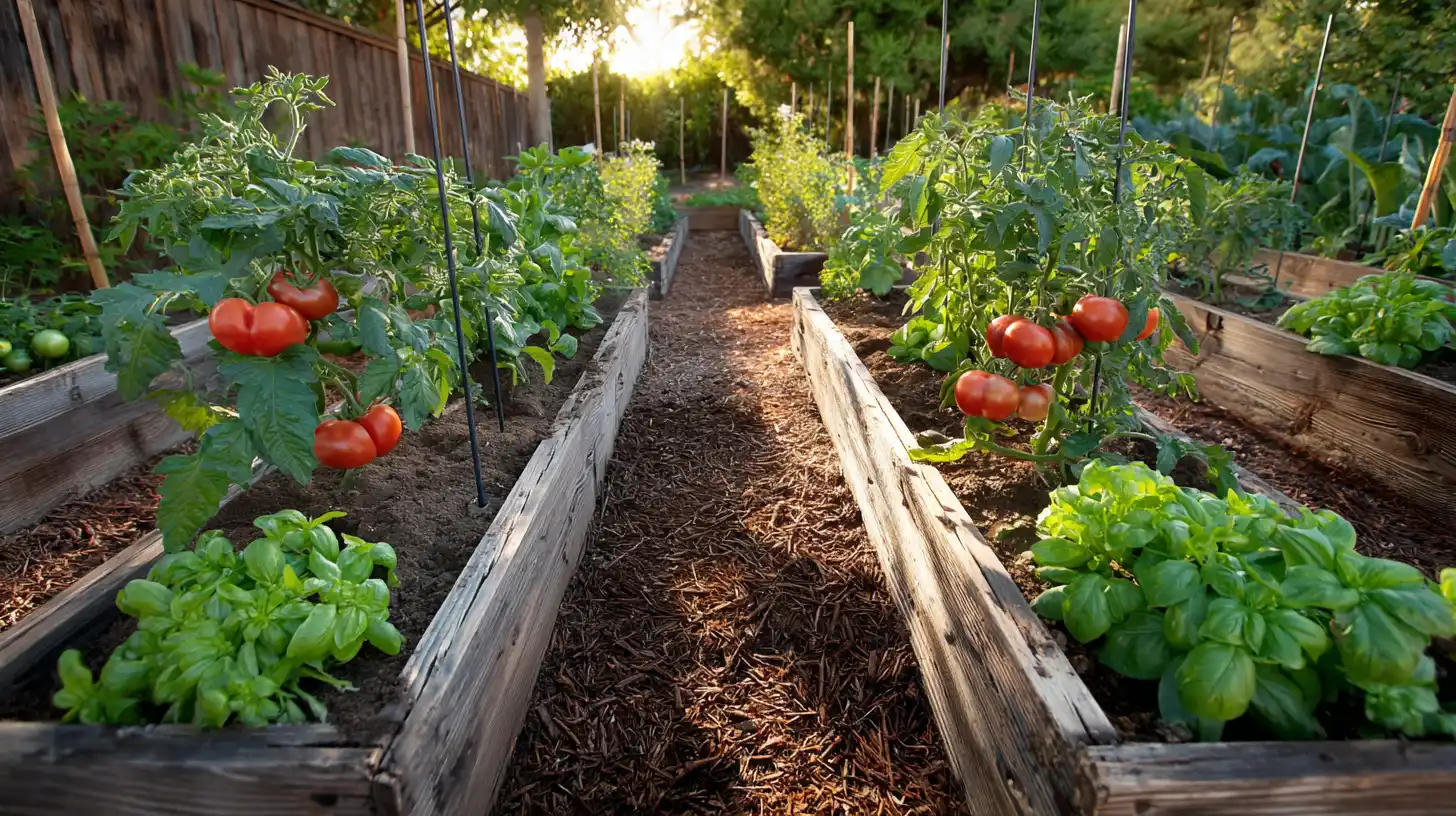
If the garden is small — say less than 25 ft on a side — skip crops that take over: field corn, potatoes in bulk, melons, winter squash, and pumpkins. Cucumbers can be trained up a trellis so they steal less ground. Compact crops for a small bed: beans, beets, cabbage, carrots, greens, onions, radishes, and turnips. In a 4×8 bed, skip field corn and plant tomatoes on a cage instead. See Sample Garden Plans.
4. What you actually want
Some gardeners only care about tomatoes. Others want as much diversity as possible. Both are fine, with one exception: growing only one crop in the same soil year after year builds pests and disease. Rotate. Plan around what you love. Decent potatoes and storage onions are cheap in stores, so small gardens often skip them — unless you want unusual colors. Asparagus, rhubarb, and fruit take two or three years to yield; do not plant them if you may move. Keep notes on what does well in your soil and climate.
Fast crops (lettuce, radish, spinach, scallions) can precede or follow long crops. Fill empty soil or mulch it — weeds will. Shallots are not green onions; scallions are. Zucchini and cherry tomatoes demand frequent picking; garlic and winter squash do not. Match the crop to your week.
5. Simplicity
It is easy to feel overwhelmed. Beginning gardeners may do well to choose as few as four crops — perhaps peas, tomatoes, cucumbers, and lettuce — and grow those well before adding more the second year.
6. Difficulty
Some plants are harder than others. Eggplant, in many places, needs warmth and protection from several pests at once. Garlic, tomatoes, and squash will produce without enormous effort, but a little extra care makes a much better crop. Follow the planting and care in this book and you should have success with at least some crops each year. Even professional farmers lose plants to weeds, pests, disease, or a week they did not have.