Getting Started
Introduction to Soil
Soil is not dirt. Dirt is what you sweep up. Soil is mineral particles, organic matter, air, water, and an enormous number of living organisms. You probably cannot choose the native soil on the lot. You can learn it, and you can improve it.
Organic matter
Organic matter is broken-up formerly living things. It almost never makes up more than about 10% of a mineral soil, and 2–5% is common in a worked garden — yet it punches above its weight. It holds water and nutrients, loosens dense ground, darkens the color, and feeds the biology that builds crumbs. If your soil is pale and dusty, add compost and keep adding it. If it already looks rich, add more — good gardeners do.
Not all dead things are equal. Wood chips and dry fall leaves are high in carbon and slow to break down. Finished compost and well-aged manure are already partly digested. Put raw woody debris on paths or in the compost pile, not as a thick uncomposted dump in an annual bed.
Minerals — sand, silt, clay
Sand, silt, and clay are size classes. Sand particles are 0.05–2.0 millimeters (USDA). Silt is smaller; clay is smaller still and holds nutrients and water — and can waterlog. Loam is a balanced mix. A simple jar test: shake soil in water, let it settle, and read the layers. A USDA texture triangle (sand / silt / clay) puts a name to the mix; the point is not the name, it is knowing whether you drain too fast or too slow.
Color and smell
Dark, crumbly soil with an earthy smell is usually high in organic matter. Pale, dusty soil is hungry. Blue-grey or blackish-grey and sour often means poor drainage.
Life in the soil
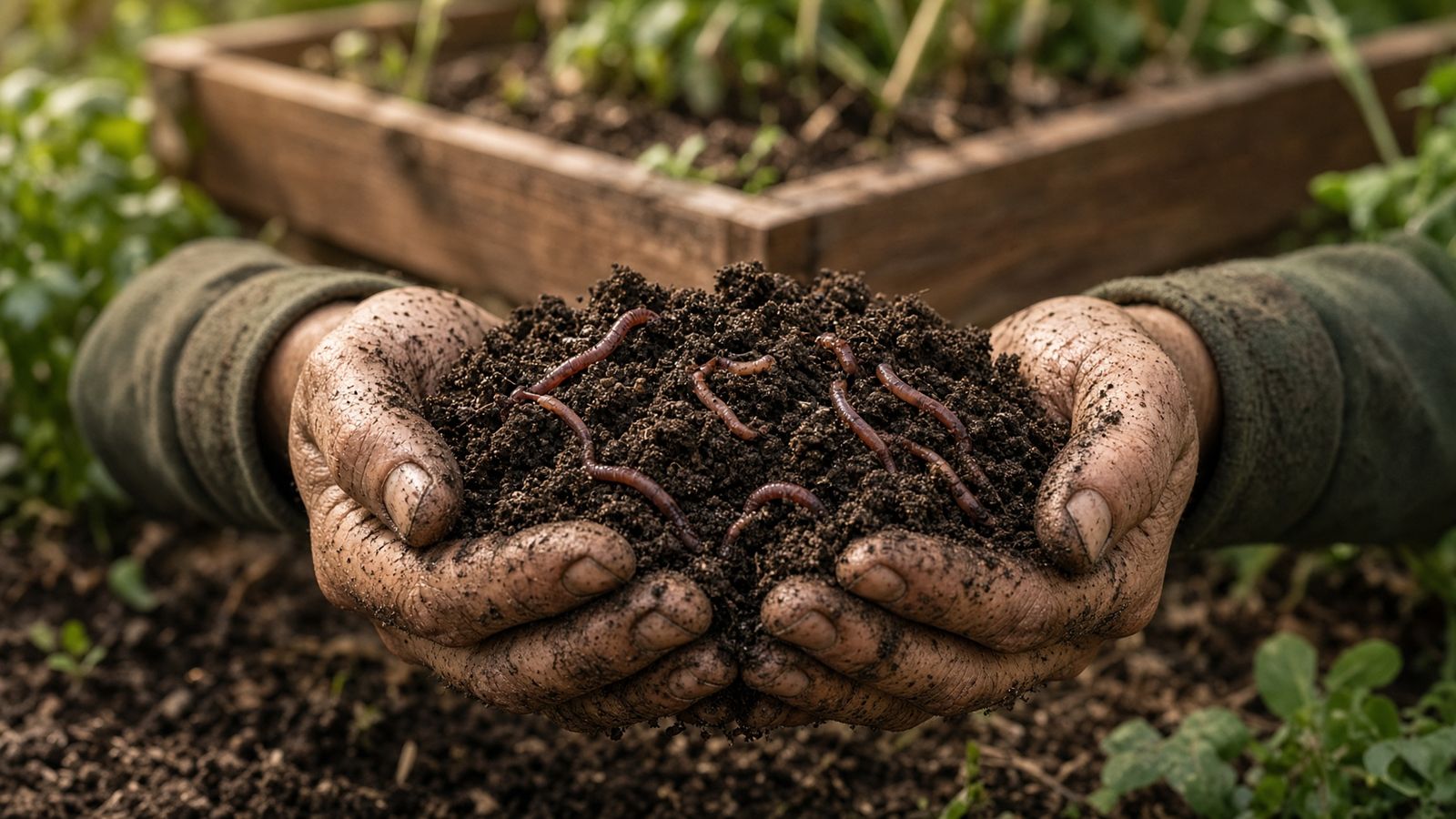
A teaspoon of healthy garden soil can hold more bacteria than there are people on Earth, plus fungi, protozoa, nematodes, and the earthworms you can see. Fungi knit particles into crumbs. Earthworms open channels for air and water. You want crumbs, not powder and not bricks. Feed that life with organic matter and stay off beds when they are soggy. Use paths.
Theoretically a soil could be all sand or all clay and still grow food if you keep adding organic matter and manage water. In practice, compost is the amendment that helps almost every texture.