Getting Started
7 Steps for Determining Where & When to Grow
1. Put long-season crops down first
Brussels sprouts, leeks, parsnips, and winter squash tie up space for 100 days or more. Place them, then fit 65–90 day crops (tomato, eggplant, broccoli), then squeeze 30–60 day crops around the edges.
2. Use beds about 40 inches across
A bed you can reach from both sides (about 1 m / 40 in wide, any length) holds three rows of small crops, two of medium, or one of tomatoes down the middle. You can plant in rows instead; beds just make rotation and mulch easier. See the 40-inch bed diagram in Sample Garden Plans.
3. Keep tall crops from shading short ones
Tomatoes, corn, and sunflowers throw shade. Put them on the north edge of a bed (in the Northern Hemisphere) so they do not eclipse lettuce. Run rows north–south when you can, so sun sweeps both sides through the day.
4. Leave paths you can actually walk
A little extra space is better than not enough. You will weed, harvest, and drag a hose.
5. Use vertical space
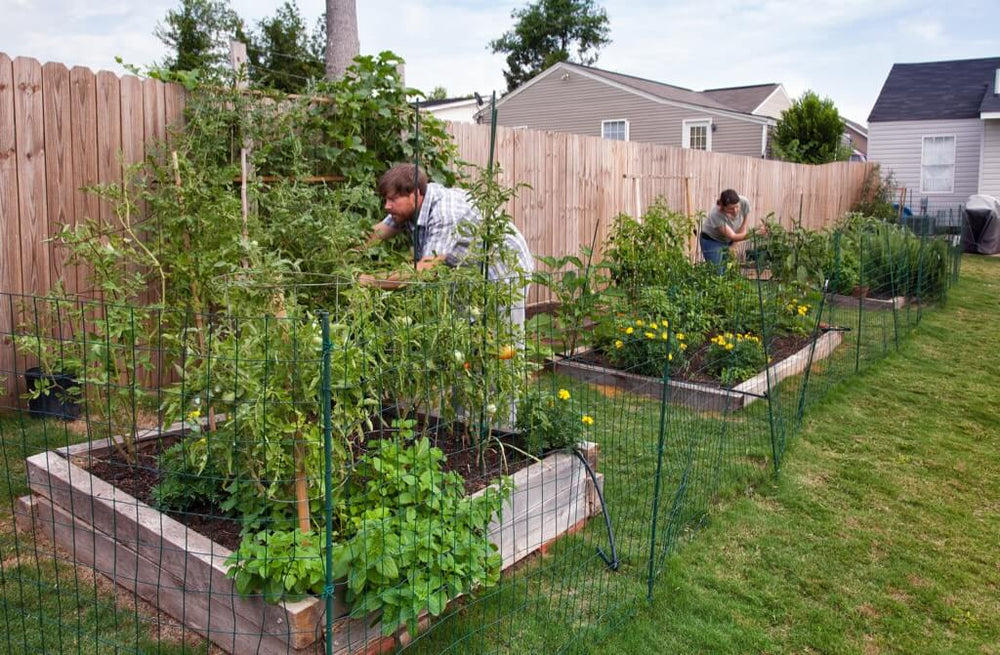
Cage tomatoes, trellis peas and cucumbers, and you get the ground back for something else.
6. Rotate plant families
Do not grow the same family in the same soil two years running if you can help it. Families that should not follow themselves:
- Brassicaceae (mustard family): broccoli, cabbage, Brussels sprouts, kale, radish, kohlrabi, turnip, cauliflower, collards, rutabaga.
- Solanaceae (nightshade family): tomato, potato, pepper, eggplant.
- Apiaceae (carrot family): carrot, parsley, celery, dill, parsnip — list parsley once.
- Cucurbitaceae (gourd family): squash, pumpkin, cucumber, melon, watermelon.
- Asteraceae (aster family): lettuce, chicory, sunflower, artichoke.
- Amaranthaceae, formerly Chenopodiaceae (goosefoot family): beet, chard, spinach.
- Amaryllidaceae (onion family; historically placed in Liliaceae): onion, garlic, leek, shallot, chive.
7. Time everything to frost dates
Look up your last spring frost and first fall frost. Every sowing date in this book is written from those two numbers. A Zone 5 example (Upper Midwest) is in a box where it helps; it is not the default for Zones 3–10.