Getting Started
Materials to Use for Mulch
When you mulch, you are covering soil on purpose to block light and stop weeds. A good mulch blocks light, lasts most of a season, is easy to get, and is easy to dispose of — ideally by turning it into the bed. Materials low in nutrients last longer as mulch because microbes do not eat them as fast.
Newspaper
Sheets, not shreds, 6–8 layers deep, wet to fit the soil. Avoid glossy color inserts. U.S. newsprint ink is no longer lead-based. Cut planting holes. Top with straw or leaves so it does not blow. You can turn it in at season’s end. Paired with straw it is almost as effective as plastic, and it is biodegradable.
Cardboard
Brown corrugated shipping boxes — not cereal-box chipboard. Offset layers so no soil shows. Excellent against tough weeds such as Canada thistle if you would rather not use plastic. Wet it well; new board is stubborn until it softens. Turn in at season’s end.
Leaves
Dried fall leaves, whole or shredded, about 6 inches deep. Water them so they do not blow. Free, widely available, easy to turn in. Wet bags are heavy — move them dry when you can.
Straw (not hay)
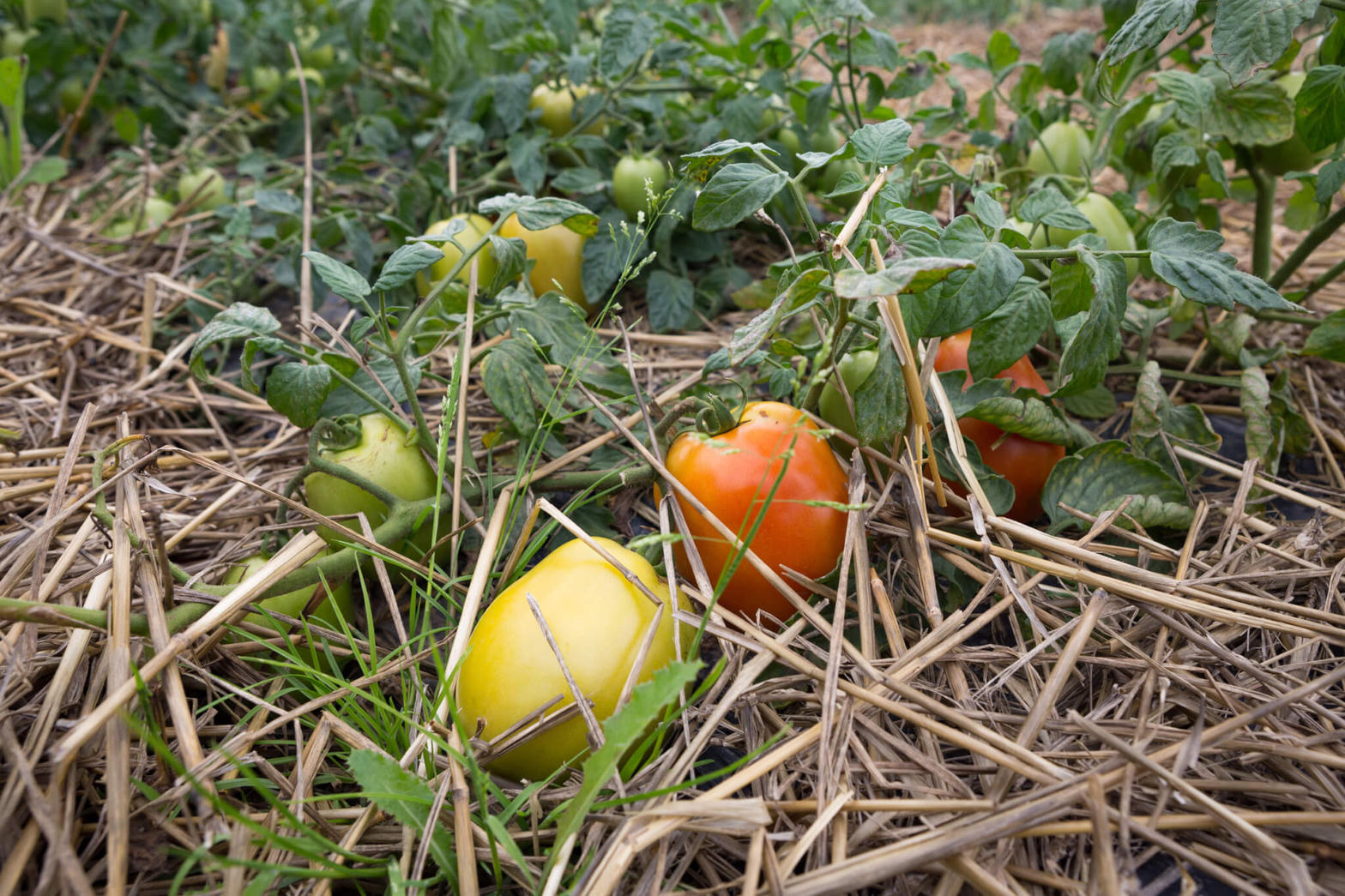
Cut, dried stems of wheat, oats, or other grains. Looser than leaves, so garlic and other overwintering crops can push through in spring. Apply at least 5 inches of loosened straw and water it. Hay was cut green; it is nutrient-rich, seeds weeds, and can rot and smell. Do not buy hay for mulch.
Grass clippings
Only dry, brown-grey clippings from a lawn that has not been treated with herbicides. Fresh green piles heat, mat, and belong in the compost, not on lettuce. Clippings break down fast; you may need to add more midseason.
Plastic and landscape fabric
Agricultural plastic warms soil and stops weeds very well. You must buy it, you cannot turn it in, and it belongs in the trash at season’s end, not in the soil. Landscape fabric lasts years and can suit perennial herbs and paths; it is expensive and sad when it clogs. Neither belongs as the default in a home organic annual bed — use organic mulches you can turn in. If you use plastic: rake, water, stretch, pin every edge, cut X-slits at planting spots. Pull it on a cool morning before it goes brittle.
What not to use on annual vegetables
Wood chips, sawdust, and bark are high in lignin. They decompose slowly and can tie up soil nitrogen. Fine on paths and around established shrubs; not as mulch on lettuce. They do not last “hundreds of years,” but they last longer than a lettuce crop. Cocoa hulls smell like chocolate and are toxic to dogs. Fresh manure is a fertilizer, not a mulch.