Getting Started
Introduction to Mulch
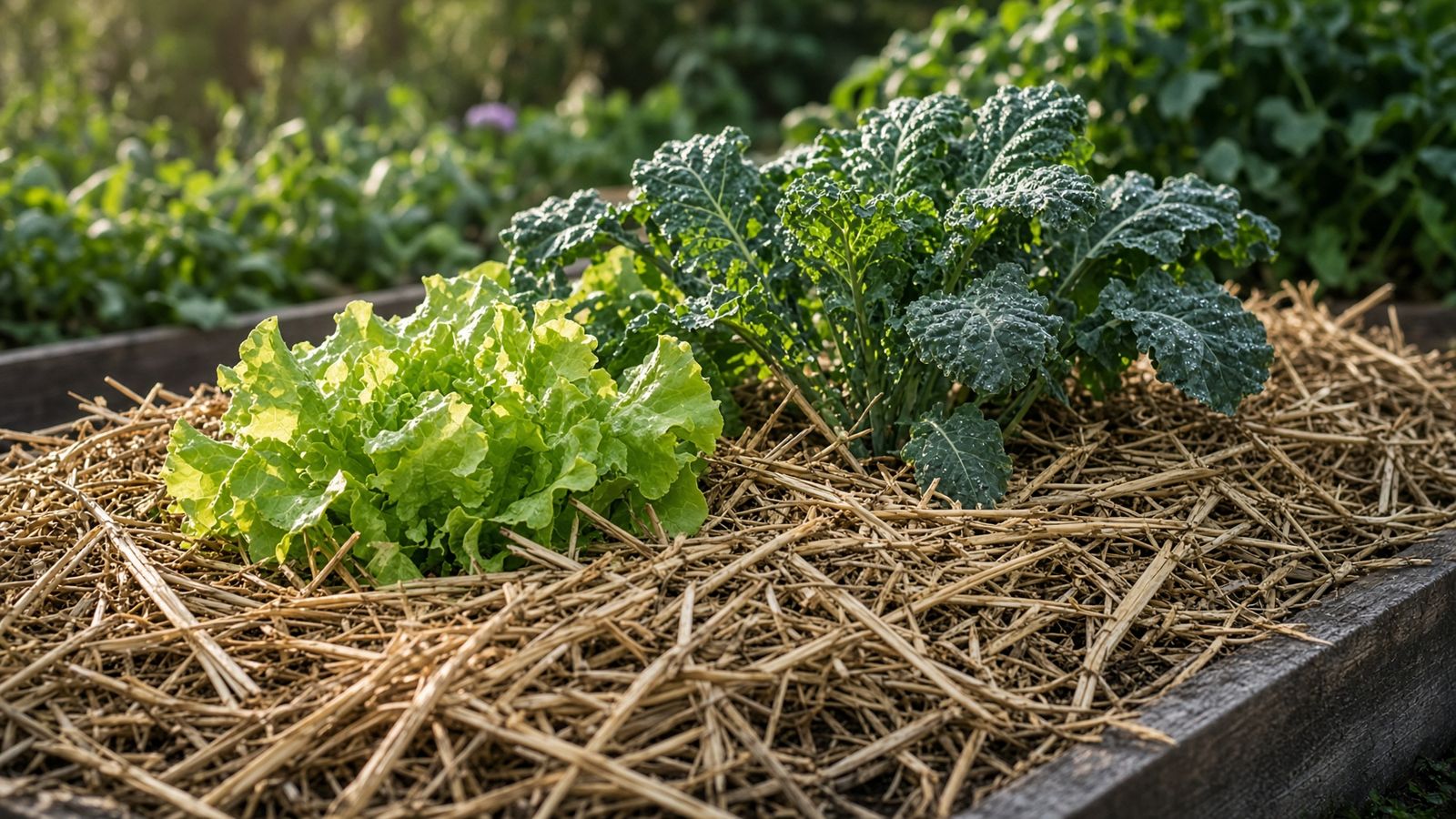
Mulch is a cover on the soil. It holds moisture, blunts weeds, feeds the surface as it breaks down, and keeps heavy rain from pounding the bed into crust. For organic gardeners the most obvious short-term benefit is weed suppression; moisture conservation and erosion control happen whether you notice them or not. Mulch also increases earthworm activity. Old mulch that is no longer a weed barrier can often be turned in as organic matter.
Three kinds of material
Natural: leaves, straw. Processed natural: newspaper, cardboard. Manufactured: agricultural plastic and landscape fabric (also plastic, but more durable). See Materials to Use for Mulch for each one in detail.
Two ways to use it
Prepare a bed, put mulch on, and transplant through holes in the mulch. Or prepare a bed, sow seed, wait until seedlings are large enough that they will not be buried, then mulch around them carefully with your hands or a hoe. Many direct-sown crops never get mulched because it is too much trouble to tuck straw around a thousand carrot seedlings — those beds need more hoeing.
What is plastic mulch?
A sheet of agricultural plastic laid on a bed, planted through slits. It warms soil, blocks weeds, and is common in commercial production. In a home organic garden it is optional. If you use it, pin edges, cut generous planting holes, and pick it up at the end of the season so it does not shatter into the soil.
What is landscape fabric?
A woven or spun geotextile sold to block weeds. It is almost as effective as plastic at first, and almost as sad five years later when it clogs and tears. Paths, maybe. Vegetable beds, no — use organic mulches you can turn in.