Getting Started
Weeding, in Practice
The full picture is in Understanding & Managing Weeds. This page is the weekly version — hand, hoe, and what to do with the pile.
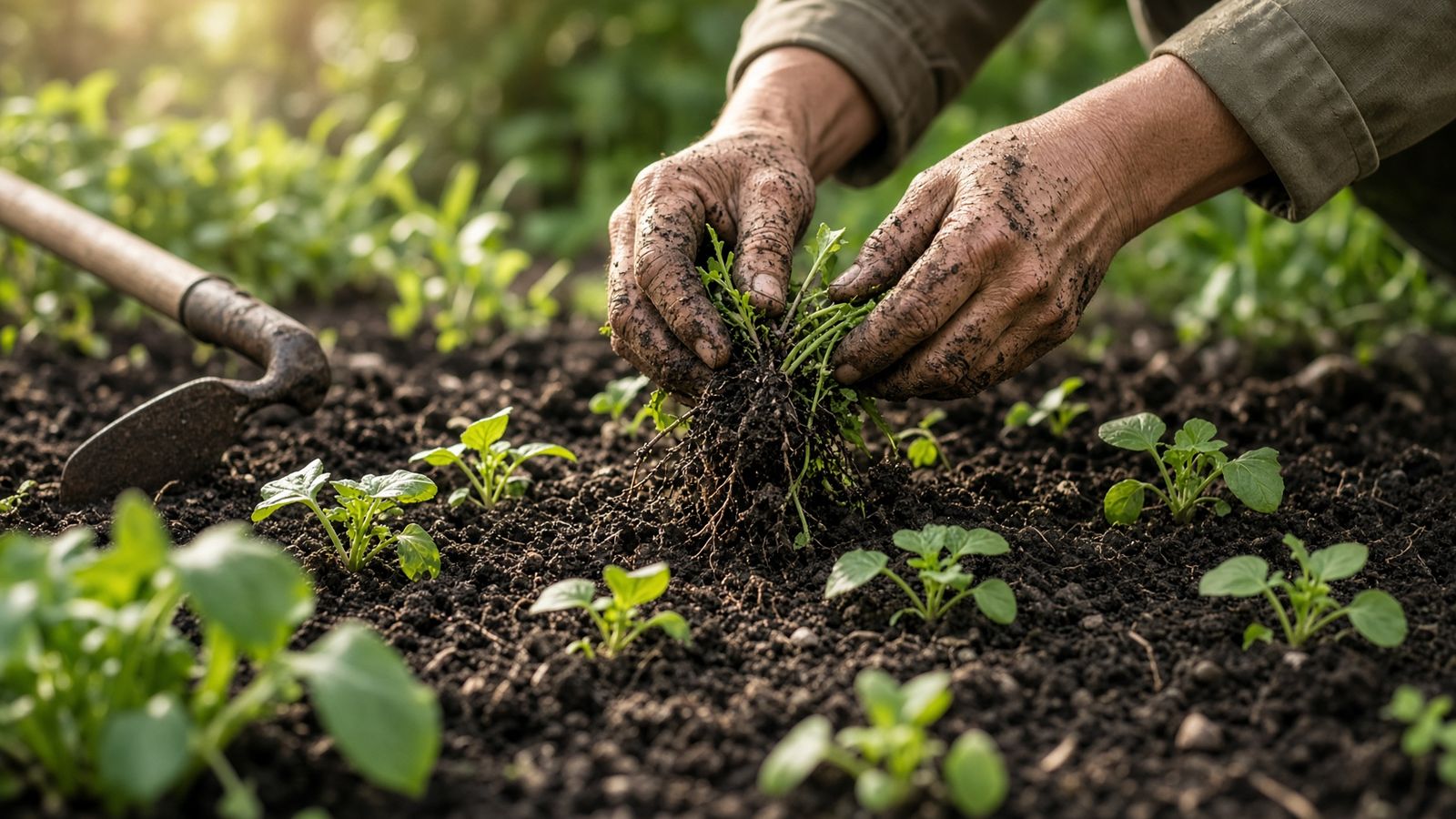
Hand weeding
Gardeners with small plots, and anyone who mulches well, may never do anything else. Find a weed, pull it so the roots come. Practice helps. A trowel, a soil knife, or a spade for big perennials is often involved. When seedlings have just emerged, weeds and crops can look alike — wait a few days until you can tell them apart. If plants are small (or weeds are large), hold the soil around the crop with one hand while you pull with the other.
Weeding with a hoe
If the garden is large, or there is open ground between young tomatoes, use a hoe. The goal is to uproot, not to mow stems. A stirrup (oscillating) hoe slices just under the surface. A collinear hoe is kind to close rows. A narrow head can work close to small plants. Keep the hoe sharp; in hard or rocky soil you will need a file. See Basic Tools.
The weekly walk
Walk the beds once a week with a hoe and a bucket. Cut annual weeds at the surface while they are smaller than your thumbnail. Dig perennial roots when the soil is moist. Mulch gaps the same day so you are not weeding them again next Tuesday. Keep paths mulched. Weeds in paths become weeds in beds.
What to do with weeds once they are out
If it is wet, or rain is coming, weeds left on the soil may reroot — take them out, usually to the compost. If it is dry, you can lay them around crops as a light mulch. If they have begun to make seed, take them out of the garden and do not put them on a pile that will not heat enough to kill seed.