Getting Started
Understanding & Managing Weeds
If you are not willing to put in the time to manage weeds, you cannot be a successful organic gardener. Sorry. On the bright side, with mulch and a modest, regular weeding habit, you can stay ahead of them.
A weed is a plant you did not invite, in a place you wanted for something else. Weeds are not a moral failing. They are the default vegetation of bare, fertile soil. Nature abhors a vacuum: any open, exposed soil will grow weeds if you do not prevent it.
The weed seed bank
You will not see most of them, but a shovelful of garden soil almost certainly holds thousands of weed seeds. Scientists call this mass the weed seed bank. Each seed is alive and waiting for the right conditions. When conditions are right for tomatoes, okra, or peas, they are also right for at least some of those seeds.
Most garden crops are annuals. They start small and compete poorly early on. Onions and their relatives have a few narrow leaves that let a lot of light hit the ground — and light on soil is a weed invitation. Tomatoes eventually shade competitors, but they take long enough to size up that there is exposed ground around them for weeks. Some seeds in the bank wait years, even decades. Perfect weeding this year does not empty the bank. Regular weeding does mean less trouble as the years go by, because you stop adding new seed.
Annuals, perennials, and volunteers
Annual weeds (purslane, lamb’s-quarters, pigweed) sprout, seed, and die in a season. Hoe them before they flower. Perennial weeds (bindweed, quackgrass, Canada thistle, dandelion) come from roots or rhizomes; hoeing the top is a haircut. Dig or smother those. One person’s weed is another’s treasure — chamomile is the usual example. Volunteer tomatoes from last year’s fruit are weeds in a carrot row and a gift in an empty corner.
What actually works
The single best way to manage weeds is not to let them grow. Keep as much soil covered as much of the time as possible. You may uncover the whole garden at the start of the season to add compost, and you will uncover strips to sow, but most of the bed can wear mulch most of the time. Weeds still germinate under mulch; many cannot push through, and those that do are weak and easy to pull. See Materials to Use for Mulch.
A 2–4 inch layer of straw, shredded leaves, or untreated dry grass clippings blocks light. Paths can be cardboard plus wood chips.
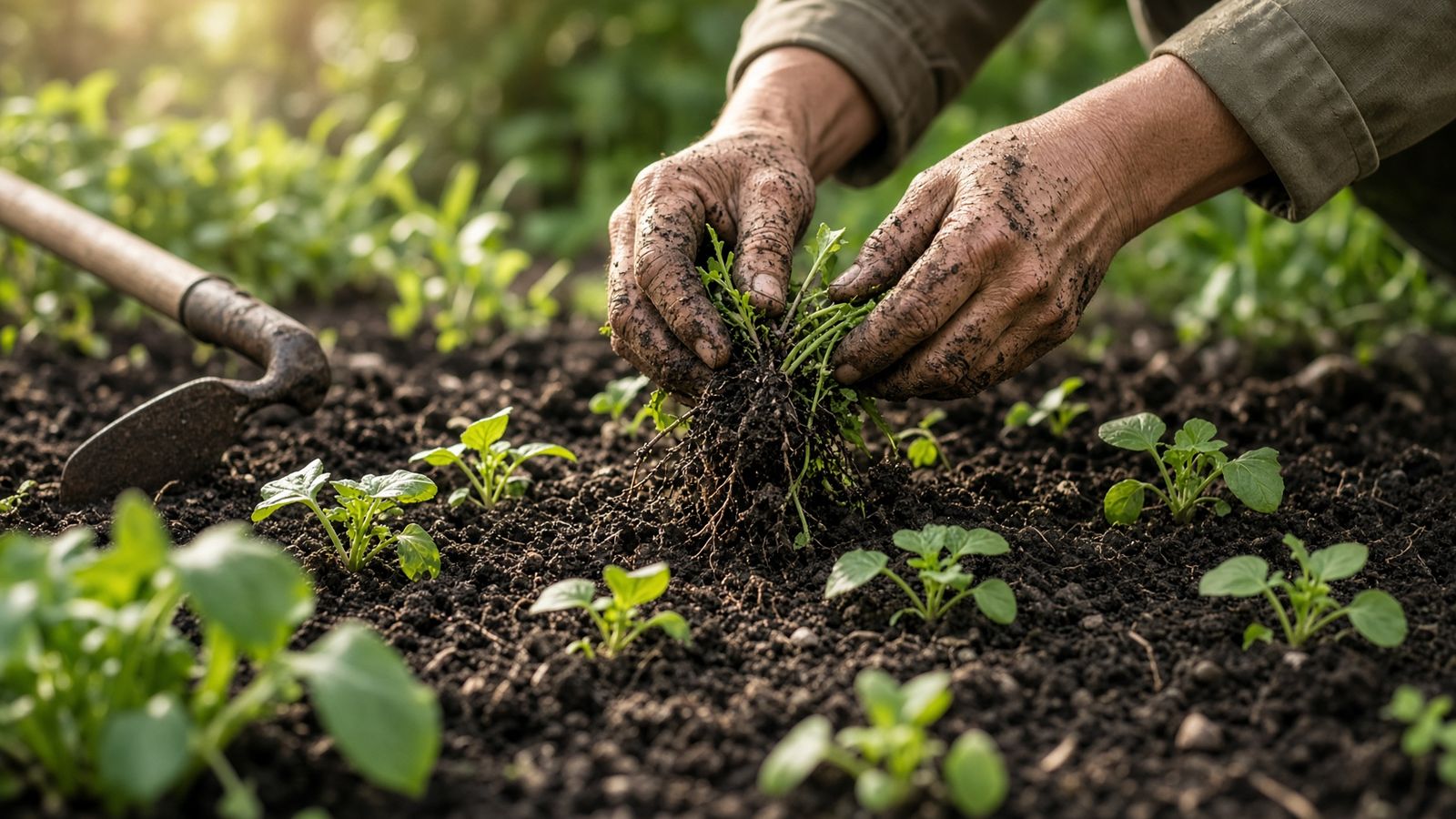
Whether you mulch or not, you will still weed. In a garden the two main tools are a hand (often with a trowel) and a hoe. However you weed, get the roots. If you only rip or slice the tops, the roots send up new stems and are harder to extract later. It is often easiest after rain or watering — roots come up. Do not leave pulled weeds sitting on wet soil; many will reroot. Take them to the compost, or at least keep the roots off the ground.
Do not let weeds seed. One year of seed is several years of work. Cover crops on empty beds outcompete weeds and feed soil. In cold climates, sow them after your last summer harvest, weeks before the ground freezes.